The Programme
About TENTing
TENTing is El-Bethel Mission's community-based welcome and integration programme. It supports refugee families, migrants and other marginalised individuals as they settle, build confidence, form trusted relationships and take positive steps towards belonging — whether in the wider community or in church life.
Through trained staff and volunteers, the programme offers practical, relational and pastoral support: help to understand local systems, access appropriate services, build everyday English confidence, reduce isolation and participate more fully in community life.
TENTing complements statutory and specialist services. It does not replace councils, housing providers, schools, NHS services, legal advisers, immigration advisers, social workers, mental health professionals or emergency services. Where specialist support is needed, the programme helps service users connect safely with appropriate agencies.
TENTing is the structured pathway. BACiP is the care method. The app is the evidence, coordination and reporting tool. The Community Welcome Centre is the long-term place of belonging.
Two pathways
TENTing offers two pathways under one shared BACiP care method, so the programme never confuses refugee integration with church integration.
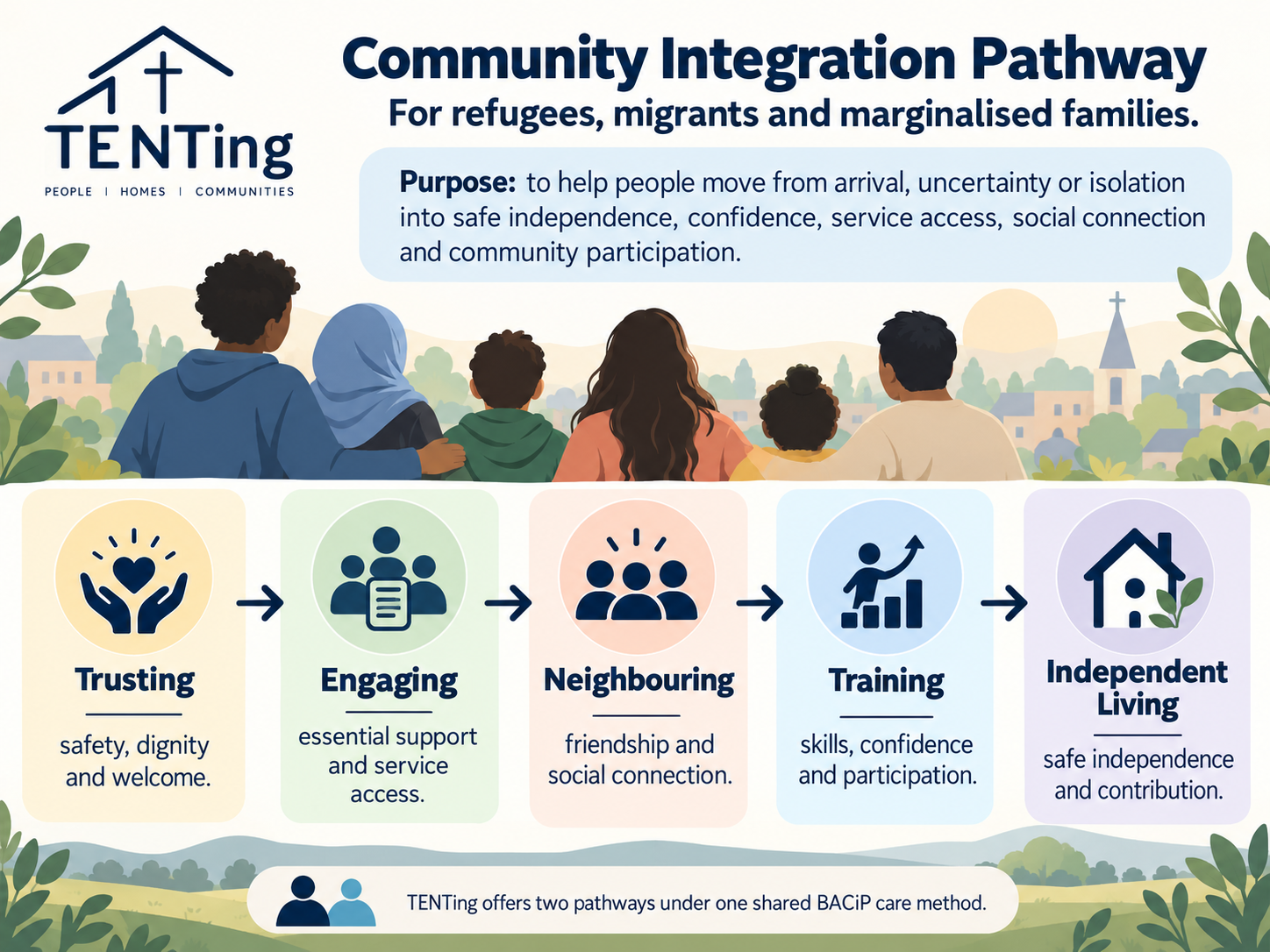
Community Integration Pathway
For refugees, migrants and marginalised families.
Purpose: to help people move from arrival, uncertainty or isolation into safe independence, confidence, service access, social connection and community participation.
Pathway
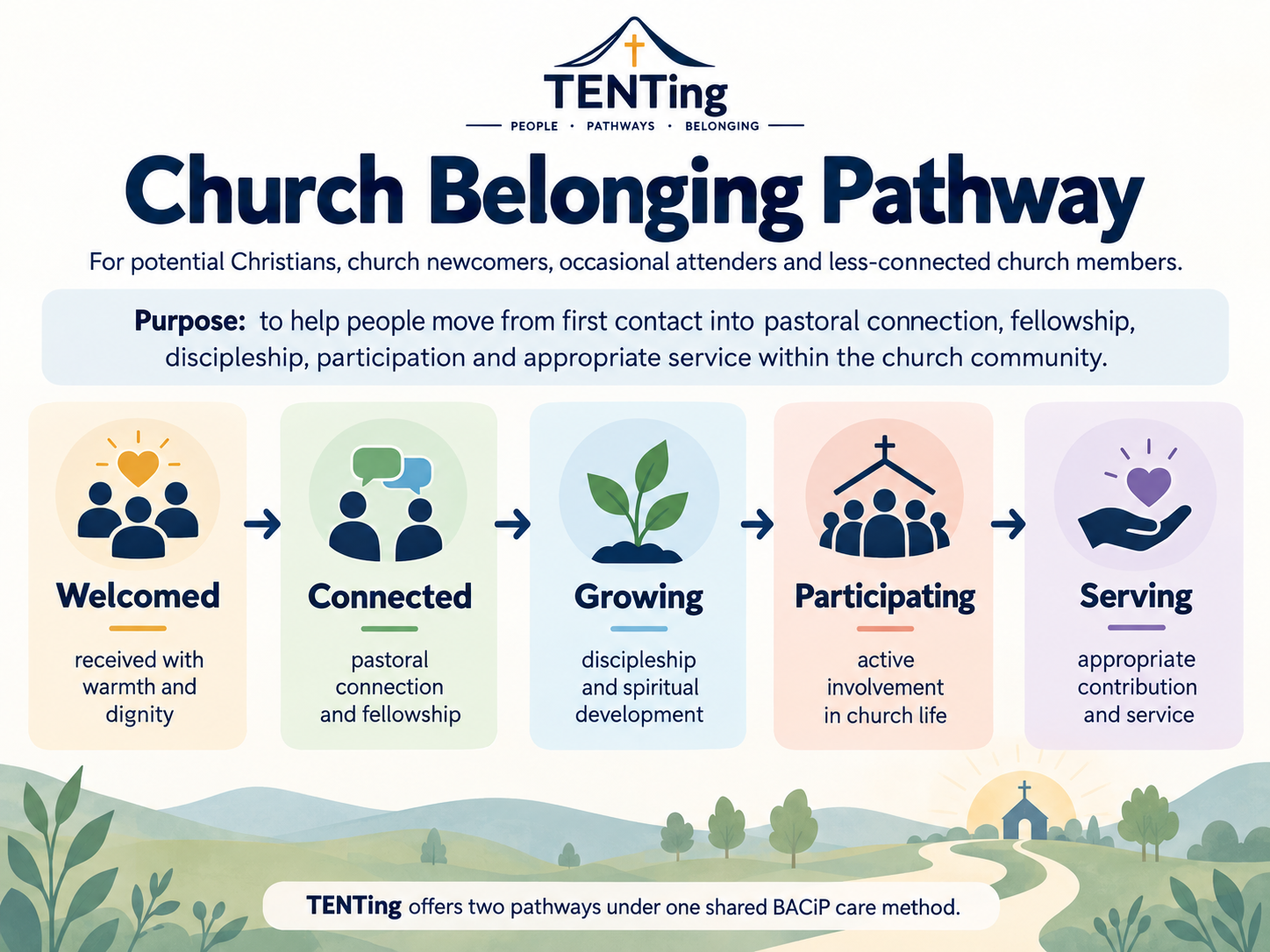
Church Belonging Pathway
For potential Christians, church newcomers, occasional attenders and less-connected church members.
Purpose: to help people move from first contact into pastoral connection, fellowship, discipleship, participation and appropriate service within the church community.
Pathway
Shared method: BACiP
Both pathways use the same BACiP care method — Befriending, Advocacy, Coaching and innovative Pastoral Care.
Befriending
Building trust through consistent, respectful and caring relationships.
Advocacy
Helping service users understand and access appropriate services without replacing specialist agencies.
Coaching
Supporting confidence, skills, independence and positive next steps.
innovative Pastoral Care
Offering dignity, hope, listening, encouragement and spiritual support where welcomed, within clear safeguarding boundaries.
Guided Start process
Every person entering either track goes through a short Guided Start process, led by trained volunteers and supervised by the TENTing team, usually over 2–4 weeks. Rather than asking people to complete long or sensitive forms on their own, sensitive information is collected during these guided sessions.
Urgent safeguarding or emergency concerns must be acted on immediately and must not be delayed by the Guided Start process.
Welcome and Trust
We listen, explain the programme, confirm consent, and understand immediate concerns.
Needs and Essential Support
We explore practical areas such as English confidence, GP/NHS access, school or family support, local orientation, digital access, appointments and community connection.
Neighbouring and Confidence
We help identify opportunities for befriending, informal English practice, shared meals, community activities, volunteering, training or local participation.
Action Plan or Referral
We agree the next step. This may include TENTing support, befriending, group activities, safe signposting, specialist referral, or a short follow-up review.
The Church Belonging Track follows a parallel four-session process: Welcome and Pastoral Listening → Connection and Barriers → Growth and Participation → Next Pastoral Step. The app shows the correct version depending on the selected track.
What TENTing offers
Welcome and local orientation
Helping people understand their local area, church environment, basic services and safe points of contact.
Befriending and social connection
Building trusted relationships through neighbourly support, pastoral connection, shared meals, fellowship and community activities.
Informal English and digital confidence
Supporting everyday English, phone use, email, online forms, translation apps and basic digital access.
Practical support with services and communication
Helping people prepare for appointments, understand letters, complete basic forms and communicate with schools, services or church teams.
Skills, volunteering, discipleship and participation pathways
Helping people identify strengths, grow in confidence, join groups, volunteer, train and contribute appropriately.
Health, wellbeing, pastoral support and safe referral
Offering non-clinical health navigation, pastoral listening, prayer where welcomed, and signposting to specialist services when needed.
What TENTing does not provide
TENTing does not provide emergency response, legal advice, immigration advice, clinical treatment, counselling, statutory social work, housing representation or specialist safeguarding services. Where specialist help is needed, the team will signpost or refer to appropriate services. If someone is in immediate danger, contact emergency services immediately.
The expected outcome — ing
Where the TENTing journey leads.

Independent in Living
Families grow in confidence and begin managing daily life with reduced dependency — from appointments and paperwork to budgeting and everyday routines.

Nurtured
Families are supported emotionally, socially and pastorally with dignity and care, through consistent relationships that reduce isolation and build wellbeing.

Grounded and Grafted
Families become grounded in their local community and grafted into positive relationships, services and opportunities that support long-term belonging.
Pilot summary
The current launch model is a small 6-month pilot supporting 5–6 refugee households. It is delivered by a part-time TENTing Coordinator, a named Safeguarding Lead, light admin support and 6–8 trained volunteers. The pilot includes befriending, informal English confidence, local orientation, neighbouring activities, safe signposting and regular progress reviews.